
 EN
EN
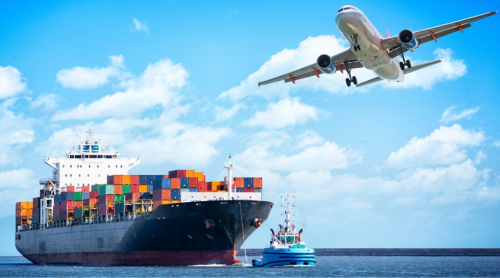
Sea freight logistics represents one of the most cost-effective transportation methods for moving goods across continents, yet its true power emerges when integrated seamlessly with air and land transport networks. Modern supply chains demand efficiency that no single transport mode can deliver alone, making sea freight logistics a critical foundation within multimodal transportation systems. The integration of sea freight logistics with complementary transport methods creates resilient, economical, and time-optimized solutions that meet diverse customer demands and market conditions.
Understanding how sea freight logistics connects with air and land transport is essential for supply chain professionals, freight forwarders, and import-export businesses. Each transport mode serves distinct purposes within the overall logistics ecosystem, and their coordination directly impacts delivery timelines, shipping costs, and customer satisfaction. By exploring the mechanisms of integration, decision frameworks, and practical applications, organizations can build transportation strategies that maximize the advantages of sea freight logistics while addressing speed and flexibility requirements through air and land alternatives.
The Foundation: How Sea Freight Logistics Connects to Multimodal Networks
Core Role of Sea Freight in Integrated Supply Chains
Sea freight logistics serves as the backbone of global trade, handling approximately 90 percent of non-perishable international cargo by volume. The economic advantage of sea freight logistics stems from its ability to move massive quantities at minimal per-unit cost, making it ideal for bulk shipments, heavy machinery, raw materials, and containerized goods. Within multimodal logistics networks, sea freight logistics creates the primary long-distance haul while land and air transport handle the first and last miles of the journey.
The integration point between sea freight logistics and other modes begins at port facilities, where sophisticated coordination systems manage the handoff of containers from vessels to trucks and trains. Modern ports function as logistics hubs where sea freight logistics information systems communicate with inland transport providers, customs authorities, and final destination warehouses. This coordination transforms sea freight logistics from a standalone service into a connected component of an end-to-end supply chain ecosystem.
Port Infrastructure and Logistics Coordination
Port infrastructure directly enables the effectiveness of sea freight logistics integration by providing the physical and digital platforms where multimodal transfers occur. Advanced container terminals equipped with automated cranes, warehousing systems, and customs pre-clearance facilities reduce dwell time and accelerate the transition from sea freight logistics to inland transport. Digital tracking systems allow sea freight logistics providers to share real-time vessel positions, container locations, and estimated arrival times with land transport operators and air freight services.
The seamless integration of sea freight logistics with port operations depends on synchronized scheduling between maritime vessels and inland transport. When sea freight logistics schedules align with available trucking or rail capacity, goods move directly from port to destination with minimal holding costs. Conversely, poor coordination creates bottlenecks where containers sit idle, reducing the efficiency of sea freight logistics and increasing total supply chain costs.
Strategic Integration Mechanisms: Coordinating Sea Freight With Air and Land Transport
Timing and Scheduling Protocols for Sea Freight Logistics
Effective sea freight logistics integration requires advanced planning that synchronizes vessel schedules with trucking windows, rail availability, and air freight departure times. Supply chain planners must forecast demand weeks or months in advance to secure space on sea freight logistics services while simultaneously booking land transport for the port-to-customer segment. This forward coordination prevents situations where sea freight logistics containers arrive at a port but lack available trucks or trains to move them inland.
Modern sea freight logistics providers publish schedule matrices showing sailing dates, port arrival times, and estimated inland delivery windows, enabling shippers to coordinate multimodal movements with precision. When air freight urgently moves time-sensitive components that will be integrated with sea freight logistics bulk shipments, timing synchronization becomes critical to avoid costly component shortages or excess inventory. The rhythm of sea freight logistics, typically measured in weeks, must align with land transport frequency and, occasionally, air freight scheduling to optimize supply chain flow.
Consolidated Shipments and Load Optimization
Sea freight logistics achieves its cost advantage through consolidated shipments where multiple shippers' goods combine in full containers, which reduces per-unit shipping rates. This consolidation model depends on land transport to collect goods from various suppliers and deliver them to consolidation hubs, where sea freight logistics teams prepare containers for export. The reverse movement occurs at destination ports, where sea freight logistics containers are deconsolidated onto trucks and delivery vehicles for final distribution.
Optimization of load efficiency across sea freight logistics, land transport, and air freight requires collaborative planning among all parties. Shippers using sea freight logistics benefit from 'less-than-container load' services where land transport collects smaller shipments, consolidates them at warehouses, then books full containers for sea freight logistics movement. Air freight handles exception shipments and premium-speed requests that would be uneconomical via sea freight logistics, creating a balanced approach where each mode serves its intended purpose.
Practical Applications: Where Sea Freight Logistics Integration Matters Most
Import-Export Business Models and Multimodal Workflows
Import-export businesses relying on sea freight logistics typically operate within structured supply chain workflows that integrate air and land transport at strategic points. A typical cycle begins when an exporter consolidates goods destined for multiple buyers at a domestic warehouse, arranges land transport to a port, books sea freight logistics capacity, then coordinates port operations to ensure timely vessel loading. Upon arrival at the destination port, sea freight logistics containers move to inland distribution centers via trucks or rail, where they are deconsolidated for final delivery.
When urgent orders arise or demand forecasts shift, air freight fills the gap that sea freight logistics cannot meet quickly, while land transport remains the workhorse for volume distribution. Importers combining sea freight logistics with air freight often employ strategies like 'ocean plus air,' where slower sea freight logistics handles baseline inventory while air freight covers unexpected spikes. This hybrid approach allows businesses to reduce total transportation spend while maintaining service level commitments.
Industry-Specific Integration Patterns
Manufacturing sectors such as automotive, electronics, and industrial equipment depend heavily on coordinated sea freight logistics, rail, and truck networks to support just-in-time production schedules. A automotive plant importing engines from overseas may rely on sea freight logistics for standard volume shipments while using sea freight logistics for emergency components via air backup services. The integration of these modes prevents production stoppages caused by supply disruptions while optimizing costs through primary reliance on economical sea freight logistics.
Retail and consumer goods businesses use sea freight logistics to move seasonal inventory across ocean routes while employing land transport for last-mile delivery to distribution centers and stores. E-commerce operations combine sea freight logistics for bulk stock with air freight for fast-moving SKUs and expedited regional orders. This layered approach to sea freight logistics integration reflects the reality that modern supply chains require multiple speed tiers, all orchestrated through unified visibility and scheduling systems.
FAQ
What are the main cost advantages of sea freight logistics compared to air and land transport alone?
Sea freight logistics offers the lowest per-ton-mile cost among all transport modes, typically costing 60 to 80 percent less than air freight and 30 to 50 percent less than long-haul trucking. The economies of scale in sea freight logistics come from massive vessel capacity, efficient fuel consumption per unit, and port infrastructure that amortizes fixed costs across thousands of containers. Land transport adds cost but remains necessary for first-mile collection and last-mile delivery, while air freight is reserved for time-critical shipments where speed justifies its premium pricing. The integration of sea freight logistics with these modes allows shippers to capture cost savings while meeting diverse service requirements.
How do digital systems improve sea freight logistics integration with other transport modes?
Modern digital platforms enable real-time visibility across sea freight logistics, land transport, and air freight networks through unified tracking systems, electronic data interchange, and cloud-based supply chain management tools. When a container loads onto a vessel, the sea freight logistics provider updates systems that automatically notify inland trucking companies about expected port arrival dates, allowing them to schedule pickup and delivery slots. Predictive analytics powered by sea freight logistics historical data help forecast delays, triggering automatic notifications and contingency planning. These digital integrations reduce communication delays, minimize schedule conflicts, and enable supply chain professionals to make informed routing decisions that optimize sea freight logistics usage.
When should a shipper choose sea freight logistics over air or land transport for their supply chain?
Sea freight logistics is the optimal choice when shipping volume is sufficient to fill containers, delivery timelines allow 2 to 6 weeks, and cost efficiency is a primary objective. Industries moving raw materials, heavy equipment, or high-volume consumer goods typically depend on sea freight logistics as their primary transport method. Air freight becomes justified for emergency shipments, low-volume high-value goods, or when production stoppages create extreme urgency. Land transport works best for regional distribution, short-haul movements, and final-mile delivery where sea freight logistics cannot economically operate. The integration of all three modes within a single supply chain strategy allows shippers to match transport method to shipment characteristics, cost budgets, and service commitments.

